Immigration reform is the hot topic in politics right now. I work in that field, so I definitely have some thoughts on the issue. Of course, refer to my disclaimer: My opinions are solely my own and do not reflect the opinions of my employer. Also, you should be aware that I follow law and policy in my work, not my personal opinion.
As I've said before, immigration is one topic where everyone has an opinion, but nobody seems to know anything about it. Not only do they get it wrong in movies and TV, even the news gets it wrong. Regularly.
I came into the field with the same understanding as a lot of people. The system is broken, and we ought to allow all the illegals to stay. Now, I know that we have, in a lot of ways, a very good system--on paper. The problem is a question of incentive and will. A person in Guatemala whose life is threatened by drug cartels and has no job prospects has a lot of incentive to come to the United States. An employer who has a shitty job that needs to be done has an incentive to hire anyone who's willing to do the job. And the government just doesn't have enough incentive, apparently, to enforce the law. And because the law hasn't been enforced, the system has broken down. If they had enforced it from the beginning, we would still have a very good system, not just on paper.
So, what are my thoughts now, after working in immigration for over four years?
Showing posts with label law. Show all posts
Showing posts with label law. Show all posts
Friday, April 12, 2013

Monday, January 28, 2013
Immigration Reform
The news says that immigration is the next big issue on the President's agenda. I expected it sooner--like three years ago--so I wrote a series on the issue. The thing that strikes me about it is that everyone has an opinion on it, but almost nobody knows anything about it. If you click here you can find my simple explanations about how the law works now. Here are the individual articles in my Immigration 101 series:
Introduction
Immigrant Petitions
Getting a Green Card
Refugee/Asylee Status and Diversity Visas
Nonimmigrant Visas
Citizenship by Birth and Naturalization
Introduction
Immigrant Petitions
Getting a Green Card
Refugee/Asylee Status and Diversity Visas
Nonimmigrant Visas
Citizenship by Birth and Naturalization
Monday, April 02, 2012
Wrest, TTTW, and Sexual Assault Charges
True Evidence, True Law

 There's been a lot of discussion about Leviathan's recent album, True Traitor, True Whore, and what that says about Wrest's current legal predicament. In case you're not aware, a former girlfriend has accused him of sexually assaulting her with a tattoo gun. (Wrest is the sole member of Leviathan
 , and a tattoo artist.) I don't intend to go into questions of guilt, innocence, truth or falsehood of the allegations, or what really happened. What I do want to talk about is what Wrest is facing, and how his latest album could bear on those charges. It's an unusual intersection of two areas of my interest: metal and law.
Given the charges he's facing, many are shocked at the album's quite frank comment. The title itself displays a possibly misogynistic attitude, and with song titles including "Harlot Rises", "True Whorror", and "Every Orifice Yawning Her Price", that doesn't appear to help matters much. Everyone knows that "what you say can and will be used against you in a court of law". But does this really get admitted into evidence?
Monday, July 26, 2010
Freedom of Photography
Story Here

Courts have long ruled that the First Amendment protects the right of citizens to take photographs in public places. Even after the terrorist attacks of Sept. 11, 2001, law enforcement agencies have reiterated that right in official policies.You may or may not remember my own unpleasant experience on this subject. I can attest that they don't take kindly to impromptu citizen lectures on Constitutional law.
But in practice, those rules don't always filter down to police officers and security guards who continue to restrict photographers, often citing authority they don't have. Almost nine years after the terrorist attacks, which ratcheted up security at government properties and transportation hubs, anyone photographing federal buildings, bridges, trains or airports runs the risk of being seen as a potential terrorist.
Wednesday, June 21, 2006
Ignoring Copyrights
This post troubles me. The author ignores copyright for bad reasons. He posts a photo with copyright owned by the AP and says this:
As a photographer, I'm extremely troubled by your attitude in this. Yes, they're taking advantage of taxpayer money, but so are you. All the time. America's military is always protecting you whether you're aware of it or not.
Why should an artist be denied the benefits of a valid copyright just because he was using taxpayer money? So people who get grants fromt the National Endowment for the Arts should not be allowed to retain their copyrights just because they are using taxpayer money? I think they would rather turn down the endowment.
Not only that, but allowing the media access to the war zones helps with PR, so they're actually providing a valuable service to the military with the taxpayer money.
This post really bothers me.
I am sourcing this photo, but I will not follow the AP’s directions…….the AP says I can’t use this photo……I am saying to AP……you would never have been able to take this picture without taxpayer money protecting your bigoted behinds.The comments on the post were in praise of the author for this attitude, and that further troubles me. Here is my response:
Am I supposed to believe the AP, somehow ended up on this rooftop in enemy controlled territory without the help of taxpayers?
So I have no qualms about using it.
As a photographer, I'm extremely troubled by your attitude in this. Yes, they're taking advantage of taxpayer money, but so are you. All the time. America's military is always protecting you whether you're aware of it or not.
Why should an artist be denied the benefits of a valid copyright just because he was using taxpayer money? So people who get grants fromt the National Endowment for the Arts should not be allowed to retain their copyrights just because they are using taxpayer money? I think they would rather turn down the endowment.
Not only that, but allowing the media access to the war zones helps with PR, so they're actually providing a valuable service to the military with the taxpayer money.
This post really bothers me.
Monday, May 08, 2006
Reasonableness and Jury Nullification
Be sure to check out the latest photo at FMPhoto, because I'm really proud of it. :)
Anyone even remotely familiar with the law is aware of the "reasonable man" or the "reasonable person." It's a standard that has found its way into every nook and cranny of the law where legislators and judges have been unable or unwilling to fill in the blanks in specific situations to decide what the law should be in those specific circumstances. For example: should the power company put nets under its power lines so they don't land on the telephone lines and cause a loud sound to go through to the person listening on the phone?
And those same people are also likely aware of the concept of "jury nullification," where juries disregard the law in favor of a result that they think is more desirable. For example: even though person A was driving like a nut case, person B (who was injured) is a big jerk and we don't want to give him any money anyway.
I now posit that the two concepts are complementary.
The concept of the "reasonable person" is simply meant to make judges and lawyers feel better about situations where they should let the jury decide the case however they please. It's more than just a concept of moral or economic fault. Any time the decision is left up to "reasonableness," the jury just gets to give money to the person who deserves it most.
The case that proves this more than any other is the famed case of Li v. Yellow Cab Co. of California, where the California Supreme Court adopted the concept of comparative negligence. This doctrine allows juries to give only part of the damages to the plaintiff because of the degree of fault which is attributable to him. There is no principled basis on which you can draw to come to the conclusion that P is 25% at fault and D is 75% at fault. And if I remember correctly, the dissent in that case made this point very clear--the concept of comparative negligence does not have its theoretical basis in the law of negligence itself. Negligence makes the person at fault pay for the damage that he's caused. Nowhere in that theory is there any room for sharing blame on an arbitrary basis.
So what is comparative negligence? It's just a tacit approval of jury nullification, allowing juries more free reign to do whatever they please. And this is true of all areas of the law where "reasonableness" rears its head. The juries ask themselves what they would have done in that position, and how sorry they feel for each party, and distribute the rewards accordingly.
Anyone even remotely familiar with the law is aware of the "reasonable man" or the "reasonable person." It's a standard that has found its way into every nook and cranny of the law where legislators and judges have been unable or unwilling to fill in the blanks in specific situations to decide what the law should be in those specific circumstances. For example: should the power company put nets under its power lines so they don't land on the telephone lines and cause a loud sound to go through to the person listening on the phone?
And those same people are also likely aware of the concept of "jury nullification," where juries disregard the law in favor of a result that they think is more desirable. For example: even though person A was driving like a nut case, person B (who was injured) is a big jerk and we don't want to give him any money anyway.
I now posit that the two concepts are complementary.
The concept of the "reasonable person" is simply meant to make judges and lawyers feel better about situations where they should let the jury decide the case however they please. It's more than just a concept of moral or economic fault. Any time the decision is left up to "reasonableness," the jury just gets to give money to the person who deserves it most.
The case that proves this more than any other is the famed case of Li v. Yellow Cab Co. of California, where the California Supreme Court adopted the concept of comparative negligence. This doctrine allows juries to give only part of the damages to the plaintiff because of the degree of fault which is attributable to him. There is no principled basis on which you can draw to come to the conclusion that P is 25% at fault and D is 75% at fault. And if I remember correctly, the dissent in that case made this point very clear--the concept of comparative negligence does not have its theoretical basis in the law of negligence itself. Negligence makes the person at fault pay for the damage that he's caused. Nowhere in that theory is there any room for sharing blame on an arbitrary basis.
So what is comparative negligence? It's just a tacit approval of jury nullification, allowing juries more free reign to do whatever they please. And this is true of all areas of the law where "reasonableness" rears its head. The juries ask themselves what they would have done in that position, and how sorry they feel for each party, and distribute the rewards accordingly.
Friday, April 14, 2006
$20 down on certiorari
The Nebraska unicameral legislature went out with a bang this time as most of the state senators are the first to leave under the recently adopted term limits. And although I don't think any cases have been filed yet, I would put $20 down on certiorari being granted for a case involving one thing they did.
Omaha has been trying for some time to swallow up suburban school districts into the Omaha Public School district. This has been in the news for some time around here, and the legislature finally decided to act on it. So what did they do? Did they let OPS annex the other school districts to make one even larger super-district.
Nope. They split up OPS into three districts.
Many people are crying "segregation" over this, saying that Nebraska is the first state in 20 years to try to segregate schools. Ernie Chambers, a crazy nutbag of a state senator (who is black and represents the affected people in particular), says it will be good for the minority children because decisions will be made by people who know what they need and care about them. But Brown v. Board says that segregation is unconstitutional even if it's in the minority children's interests. But Chambers also said that under the OPS regime there was de facto discrimination and segregation by the OPS board (who I have previously criticized in three parts: one, two, and three) and that this measure will rectify the situation.
The attorney general of Nebraska himself has said he has grave concerns about the move. He could end up on either side of this case, depending on what he concludes about it, as I understand his duties.
Although the districts have been drawn on racial lines (some who were against the bill said there was no other way to draw them) there may be some saving graces built into the statute. It makes uniform tax levies, which as I understand it will give the districts relatively equal amounts of tax money. The districts will work together on some issues. And it puts the burden on the school districts themselves to integrate. We will see if that last one is enough to save it from being found unconstitutional, because I'd put another $5 down that this will be the element that will be the most fiercely litigated and scrutinized by the courts.
Now, are there any takers?
Omaha has been trying for some time to swallow up suburban school districts into the Omaha Public School district. This has been in the news for some time around here, and the legislature finally decided to act on it. So what did they do? Did they let OPS annex the other school districts to make one even larger super-district.
Nope. They split up OPS into three districts.
Many people are crying "segregation" over this, saying that Nebraska is the first state in 20 years to try to segregate schools. Ernie Chambers, a crazy nutbag of a state senator (who is black and represents the affected people in particular), says it will be good for the minority children because decisions will be made by people who know what they need and care about them. But Brown v. Board says that segregation is unconstitutional even if it's in the minority children's interests. But Chambers also said that under the OPS regime there was de facto discrimination and segregation by the OPS board (who I have previously criticized in three parts: one, two, and three) and that this measure will rectify the situation.
The attorney general of Nebraska himself has said he has grave concerns about the move. He could end up on either side of this case, depending on what he concludes about it, as I understand his duties.
Although the districts have been drawn on racial lines (some who were against the bill said there was no other way to draw them) there may be some saving graces built into the statute. It makes uniform tax levies, which as I understand it will give the districts relatively equal amounts of tax money. The districts will work together on some issues. And it puts the burden on the school districts themselves to integrate. We will see if that last one is enough to save it from being found unconstitutional, because I'd put another $5 down that this will be the element that will be the most fiercely litigated and scrutinized by the courts.
Now, are there any takers?
Thursday, April 06, 2006
Attorney's Fees

We talked about fees and billing yesterday in Legal Profession class. And comparison of two particular situations bothered me. In both of them the billing is based on time spent.
1. Attorney is on a plane for two hours for the sake of Client X (who has a really cool name--I like that letter). While on the plane, he does work for Client Y.
2. Attorney talks with Client Z for 5 minutes. He then does work for Client W for 10 minutes. That's all the work he does for either client the whole day. He bills in 15-minute increments.
In situation 1, Client X is getting his plane flight. It's perfectly acceptable to bill him for the flight. Client Y is getting 2 hours worth of work out of Attorney. So, in effect, Attorney is doing 4 hours of work in a 2 hour span. But he can't bill them both for 2 hours. He can only bill for a total of 2 hours. This is insane, because it encourages attorneys to be inefficient with their time. Just because he's doing work for Y doesn't mean that X should get free travel, or vise versa.
In situation 2, however, although Attorney only works for 15 minutes, he can charge each of his clients for 15 minutes of time. So he gets paid for 30 minutes of work when he's only doing 15!
This doesn't make any sense to me.
Take another situation. Attorney does a will for R. It takes five hours, so he bills R for five hours of work. Attorney then agrees to do a will for S and to charge hourly. It turns out that S's will is exactly like R's, so it only takes 15 minutes to do the work. Attorney is only allowed to bill S for 15 minutes here. Does this make any sense? Assuming Attorney's rate is $100/hour (pretty darn low for a lawyer) then R paid $500 and S paid $25 for the exact same thing. Is this fair?
Maybe I'm biased because I plan to go into law. I'm not sure. That's why I'd like to know what you think.
Wednesday, March 29, 2006
FBI Checking License Plates
Before I discuss this issue, I'd like to note that I've posted a lot of brand new pictures on my photoblog, and they're at these locations:
Snow-covered Swing
Snow-covered Telephone Pole
Solo Conversationalist
Orange-lime
But I've gotten into the habit of not posting these links here, so make sure to check out every day!
Yesterday I got into a discussion with someone about an interesting topic. Apparently, some protesters planned to meet at a book store somewhere in Colorado. The FBI, upon learning this, decided to run all the license plate numbers for the cars in the store's parking lot. She was, probably understandably, bothered by this. My response? Well, maybe it's a little bit 1984, but there's nothing unconstitutional about it. And I think the fact that she didn't tell me what these people were protesting gives me a bit of added clarity on the issue.
Every contra-factual situation (hypothetical) she threw at me to get me to change my mind either elicited the same response or the response that it violated the 4th or the 1st Amendment.
Think about it for a second. There is no 4th Amendment violation. The FBI isn't searching anything, in the constitutional sense. They're only looking through their own records, which they have full right to do. And they're only looking at license plate numbers that are in plain view. They're not interfering with these people's lives by stopping them, so there's no arrest or even a simple stop. So clearly the 4th Amendment isn't violated here.
One hypothetical that particularly bothered me was this: what if the FBI hides somewhere across the street and looks in your window on a full-time basis. This is incredibly bothersome, but they're not searching anything in the constitutional sense. So far as I know, SCOTUS haven't even decided to make this a violation of their generalized "right to privacy." My friend then pointed out that this is a waste of government resources, but so what? That's still not illegal, it's just stupid.
As far as the 1st Amendment, there would only possibly be a violation if the FBI was doing this with the intent of suppressing speech based on viewpoint, and even then I think you have an uphill battle if you take it to court. They have every right to find out if someone has an outstanding warrant for their arrest and to arrest them. Just because you're going to a protest doesn't protect you from crimes that you've committed. I think they also have the right to observe that some groups of speakers are more likely to have criminal records than others and to act accordingly. And they certainly shouldn't be required to blind their eyes to the fact that a particular known criminal is a member of a particular protest group, and those that associate with that criminal may be involved in a joint criminal enterprise.
Sure, I don't want the FBI tracking my every move. But that's not what's going on here. They're only picking either an arbitrary or an incredibly efficient method of looking through their own records. They could certainly look through every fifth name they have in the system, but it's more efficient to look through records when they know where a person is. I don't see any problem with the FBI goig to a Wal-Mart parking lot every day and checking every license plate there. The only way you're going to be harassed here is if you've already committed a crime. Is this a problem? I think not.
Snow-covered Swing
Snow-covered Telephone Pole
Solo Conversationalist
Orange-lime
But I've gotten into the habit of not posting these links here, so make sure to check out
every day!Yesterday I got into a discussion with someone about an interesting topic. Apparently, some protesters planned to meet at a book store somewhere in Colorado. The FBI, upon learning this, decided to run all the license plate numbers for the cars in the store's parking lot. She was, probably understandably, bothered by this. My response? Well, maybe it's a little bit 1984, but there's nothing unconstitutional about it. And I think the fact that she didn't tell me what these people were protesting gives me a bit of added clarity on the issue.
Every contra-factual situation (hypothetical) she threw at me to get me to change my mind either elicited the same response or the response that it violated the 4th or the 1st Amendment.
Think about it for a second. There is no 4th Amendment violation. The FBI isn't searching anything, in the constitutional sense. They're only looking through their own records, which they have full right to do. And they're only looking at license plate numbers that are in plain view. They're not interfering with these people's lives by stopping them, so there's no arrest or even a simple stop. So clearly the 4th Amendment isn't violated here.
One hypothetical that particularly bothered me was this: what if the FBI hides somewhere across the street and looks in your window on a full-time basis. This is incredibly bothersome, but they're not searching anything in the constitutional sense. So far as I know, SCOTUS haven't even decided to make this a violation of their generalized "right to privacy." My friend then pointed out that this is a waste of government resources, but so what? That's still not illegal, it's just stupid.
As far as the 1st Amendment, there would only possibly be a violation if the FBI was doing this with the intent of suppressing speech based on viewpoint, and even then I think you have an uphill battle if you take it to court. They have every right to find out if someone has an outstanding warrant for their arrest and to arrest them. Just because you're going to a protest doesn't protect you from crimes that you've committed. I think they also have the right to observe that some groups of speakers are more likely to have criminal records than others and to act accordingly. And they certainly shouldn't be required to blind their eyes to the fact that a particular known criminal is a member of a particular protest group, and those that associate with that criminal may be involved in a joint criminal enterprise.
Sure, I don't want the FBI tracking my every move. But that's not what's going on here. They're only picking either an arbitrary or an incredibly efficient method of looking through their own records. They could certainly look through every fifth name they have in the system, but it's more efficient to look through records when they know where a person is. I don't see any problem with the FBI goig to a Wal-Mart parking lot every day and checking every license plate there. The only way you're going to be harassed here is if you've already committed a crime. Is this a problem? I think not.
Thursday, March 23, 2006
The Right (Not) to Associate
Note: new picture at FMPhoto.
Today in Constitutional Law II we will be talking about two cases involving the First Amendment right not to associate. The justification for this right is simple. If you have the right to speech and to peaceably assemble, then this right would be violated if you could not associate with others for the purposes of speech. And your ability to associate with others presupposes the ability to exclude those that you wish to exclude.
We read two cases on the subject. In the first, the Jaycees (a largely commercially-oriented organization) wanted to exclude women from voting membership in their organization. The Court upheld a state's right to force integration of the group. In the second, the Court struck down a state's attempt to force the Boy Scouts of America to allow a gay-rights activist to be a scout leader.
I agree with the result in both cases, but their methods trouble me. In both cases, the Court looked to the speech that the organizations were trying to engage in and tried to determine whether allowing state inteference would interfere with the message of the group. This appalls me. If a group is making a claim that it interferes with their speech, this should be prima facie, indisputable evidence that it does interfere with the speech of the group. If the BSA says that they disapprove of homosexuality, then you should accept that message--if only because the claim in court is a powerful First Amendment-protected message itself.
If you don't like the latter result, try to think about it from another perspective. Assume that an actively racist person is also an avowed homosexual. This gay, racist man is very active with his views, and speaks out against non-whites on a regular basis in full public view. He also wants to join the GBLT, a homosexual-rights group. The GBLT wants to exclude him because of his racist views. Would you want a court determining whether forcing the GBLT to include him would interfere with the message that the GBLT is trying to convey? I think not. The BSA case was a perfect opportunity for the Court to overturn the analysis in the Jaycees case, but they didn't take it. This was one time when stare decisis would not have been greatly offended by doing so.
Today in Constitutional Law II we will be talking about two cases involving the First Amendment right not to associate. The justification for this right is simple. If you have the right to speech and to peaceably assemble, then this right would be violated if you could not associate with others for the purposes of speech. And your ability to associate with others presupposes the ability to exclude those that you wish to exclude.
We read two cases on the subject. In the first, the Jaycees (a largely commercially-oriented organization) wanted to exclude women from voting membership in their organization. The Court upheld a state's right to force integration of the group. In the second, the Court struck down a state's attempt to force the Boy Scouts of America to allow a gay-rights activist to be a scout leader.
I agree with the result in both cases, but their methods trouble me. In both cases, the Court looked to the speech that the organizations were trying to engage in and tried to determine whether allowing state inteference would interfere with the message of the group. This appalls me. If a group is making a claim that it interferes with their speech, this should be prima facie, indisputable evidence that it does interfere with the speech of the group. If the BSA says that they disapprove of homosexuality, then you should accept that message--if only because the claim in court is a powerful First Amendment-protected message itself.
If you don't like the latter result, try to think about it from another perspective. Assume that an actively racist person is also an avowed homosexual. This gay, racist man is very active with his views, and speaks out against non-whites on a regular basis in full public view. He also wants to join the GBLT, a homosexual-rights group. The GBLT wants to exclude him because of his racist views. Would you want a court determining whether forcing the GBLT to include him would interfere with the message that the GBLT is trying to convey? I think not. The BSA case was a perfect opportunity for the Court to overturn the analysis in the Jaycees case, but they didn't take it. This was one time when stare decisis would not have been greatly offended by doing so.
Friday, February 24, 2006
Capital Punishment: Implementation
Last week I discussed the moral issues involving the death penalty. Now, I will move on to the application of the death penalty.
Some major goals of the criminal justice system are
1. Rehabilitation
2. Removing dangerous persons from society
3. Retribution
4. Maintaining respect for and enforcing the law (this includes but is not limited to deterrence)
Mr. K has suggested that he doesn’t believe in free will. If you don’t, then the retribution goal doesn’t make much sense, but I think overall my scheme will still make sense (except for execution for particularly heinous crimes).
The major problems with the death penalty that I have identified (with your help) are
1. The possibility that we are wrong
2. That life in prison is just as good as far as removing dangerous persons from society
3. It does not meet the rehabilitation goal of the law
4. It’s randomly and prejudicially applied
The random application problem cannot be addressed unless SCOTUS changes its position (that mercy must always be allowed to be applied on an individual basis) so that it applies automatically in certain situations. Justice Scalia has expressed support for this position, so time will tell whether we ever get there. The interesting thing is that mercy is applied today simply as reverse prejudice. Once we get over this hump, we can move on.
Capital punishment should only apply when
1. One of the following is met:
a. The crime is particularly deserving of retribution
b. The crime directly undermines the criminal justice or penal system
2. AND there is a very low chance for executing the wrong person
Is this a good summary? Of course, the issue remains that some people would be against the death penalty in all cases, or if there is any chance for executing the wrong person. Speak up if that’s the case. But if you apply it automatically under certain extraordinary circumstances, then it better meets the retribution rationale. Also, if it remains an extraordinary punishment, and is applied automatically, then it will better serve the deterrence rationale.
The good thing, though, is that this standard is likely to be met in most situations when the death penalty should apply.
Other crimes that undermine all the goals of the criminal justice system are also especially deserving of extreme punishment. The criminal justice system deserves special protection from crime so it can more adequately perform its duties and to increase respect for the workings of the system. Crimes that fit this criteria include murders of people involved in investigations, law enforcement, criminal trials, or grand jury proceedings, including
1. Judges
2. Prosecutors (or possibly even a defense attorney in some circumstances)
3. Witnesses
4. Jurors
5. Investigators
6. Police officers
7. Others?
Finally, crimes that are extraordinarily heinous are more deserving of retribution. This is a category of aggravating circumstance that has received much abuse because it is very subjective. So we should restrict it and better define it. I would suggest allowing it only when the perpetrator has killed on more than one occasion (killing several people at once is less cold-blooded than killing, thinking about it, and killing again) and killing after torture (which should be narrowly defined). I actually can’t think of any other circumstances that should meet this criteria. This criterion, however, meets only the retribution rationale and does not better promote any other goals, and so it is probably the least useful instance for implementing the death penalty.
What am I missing here? Is this system morally acceptable? Is it practically possible? Does it still fail to do something significantly better than life imprisonment? Let me know what you think about my alternative capital punishment scheme.
Some major goals of the criminal justice system are
1. Rehabilitation
2. Removing dangerous persons from society
3. Retribution
4. Maintaining respect for and enforcing the law (this includes but is not limited to deterrence)
Mr. K has suggested that he doesn’t believe in free will. If you don’t, then the retribution goal doesn’t make much sense, but I think overall my scheme will still make sense (except for execution for particularly heinous crimes).
The major problems with the death penalty that I have identified (with your help) are
1. The possibility that we are wrong
2. That life in prison is just as good as far as removing dangerous persons from society
3. It does not meet the rehabilitation goal of the law
4. It’s randomly and prejudicially applied
The random application problem cannot be addressed unless SCOTUS changes its position (that mercy must always be allowed to be applied on an individual basis) so that it applies automatically in certain situations. Justice Scalia has expressed support for this position, so time will tell whether we ever get there. The interesting thing is that mercy is applied today simply as reverse prejudice. Once we get over this hump, we can move on.
Capital punishment should only apply when
1. One of the following is met:
a. The crime is particularly deserving of retribution
b. The crime directly undermines the criminal justice or penal system
2. AND there is a very low chance for executing the wrong person
Is this a good summary? Of course, the issue remains that some people would be against the death penalty in all cases, or if there is any chance for executing the wrong person. Speak up if that’s the case. But if you apply it automatically under certain extraordinary circumstances, then it better meets the retribution rationale. Also, if it remains an extraordinary punishment, and is applied automatically, then it will better serve the deterrence rationale.
How do we reduce the chance for error?
One thought that I had is that it would require an overwhelming evidence standard. This would be met by any number of factors, such as multiple murders (a pattern reduces the chance for error), little or no exculpatory evidence, video evidence, the culprit was captured immediately after committing the crime with no chance for mistaken identity, a large number of eye witnesses, or DNA evidence with no reasonable alternative explanation. Some of these could possibly stand alone, while others would need to be in combination.The good thing, though, is that this standard is likely to be met in most situations when the death penalty should apply.
What crimes meet the other criteria?
Of course, to some extent all crimes undermine the legal system, but not all of them directly undermine the criminal justice system or the penal system. An obvious answer is that capital punishment should apply when someone commits murder while in prison. When someone has done this, they are interfering with the penal system—in fact, they are interfering with the right of others to rehabilitation and they have exhibited an abandonment of their own right to rehabilitation. I do have some concern for abuse in this category (it would be easy to frame someone for murder in prison) but the overwhelming evidence requirement should rectify this.Other crimes that undermine all the goals of the criminal justice system are also especially deserving of extreme punishment. The criminal justice system deserves special protection from crime so it can more adequately perform its duties and to increase respect for the workings of the system. Crimes that fit this criteria include murders of people involved in investigations, law enforcement, criminal trials, or grand jury proceedings, including
1. Judges
2. Prosecutors (or possibly even a defense attorney in some circumstances)
3. Witnesses
4. Jurors
5. Investigators
6. Police officers
7. Others?
Finally, crimes that are extraordinarily heinous are more deserving of retribution. This is a category of aggravating circumstance that has received much abuse because it is very subjective. So we should restrict it and better define it. I would suggest allowing it only when the perpetrator has killed on more than one occasion (killing several people at once is less cold-blooded than killing, thinking about it, and killing again) and killing after torture (which should be narrowly defined). I actually can’t think of any other circumstances that should meet this criteria. This criterion, however, meets only the retribution rationale and does not better promote any other goals, and so it is probably the least useful instance for implementing the death penalty.
What am I missing here? Is this system morally acceptable? Is it practically possible? Does it still fail to do something significantly better than life imprisonment? Let me know what you think about my alternative capital punishment scheme.
Thursday, January 19, 2006
Justice White’s Dissent in Wade and Bolton
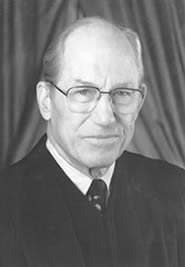 “The Court apparently values the convenience of the pregnant mother more than the continued existence and development of the life or potential life which she carries. Whether or not I might agree with that marshalling of values, I can in no event join the Court’s judgment because I find no constitutional warrant for imposing such an order of priorities on the people and legislatures of the States. In a sensitive area such as this, involving as it does issues over which reasonable men may easily and heatedly differ, I cannot accept the Court’s exercise of its clear power of choice by interposing a constitutional barrier to state efforts to protect human life and by investing mothers and doctors with the constitutionally protected right to exterminate it. This issue, for the most part, should be left with the people and to the political processes the people have devised to govern their affairs.”
Tuesday, November 29, 2005
William L. Prossner Quote
Your lawyer in practice spends a considerable part of his life in doing distasteful things for disagreeable people who must be satisfied against an impossible time limit in which there are hourly interruptions from other disagreeable people who want to derail the train; and for his blood, sweat, and tears, he receives in the end a few unkind words to the effect that it might have been done better, and a protest at the size of the fee.
Tuesday, November 22, 2005
Lawyer Advertising
The Florida Supreme Court isn't going to allow a law firm to use pit bulls as a mascot/advertising scheme/phone number. Read about it here, if you want.
Apparently they're also worried about lawyers being compared to sharks. Like that would ever happen. :)
So, apparenlty the First Amendment doesn't apply to lawyers.
Can I use a Terminator as a mascot? Or what about a ninja? A noble samurai warrior, perhaps?
Apparently they're also worried about lawyers being compared to sharks. Like that would ever happen. :)
So, apparenlty the First Amendment doesn't apply to lawyers.
Can I use a Terminator as a mascot? Or what about a ninja? A noble samurai warrior, perhaps?
Stupid Miranda Rules
Miranda v. Arizona excludes evidence of anything you say, while under arrest, until after the officers tell you that you have the right to remain silent. Doyle v. Ohio, to make this a real right, disallows prosecutors from commenting on the silence of a defendant who has been read his rights. But Jenkins v. Anderson, on the other hand, allows prosecutors to comment on a defendant’s pre-arrest silence when he has not been read his rights. And Weir v. Fletcher says that they can comment on your silence even after arrest, but before the warnings are given. So, before they read you your rights, you don’t have the right to remain silent, but you have the right to say anything you want (although it can be used to impeach you at trial). After they read you your rights, you have the right to remain silent, but anything you do say can be used against you.
Why does your right depend on whether they told you about it?
Why are the rights reversed (and ill-protected) upon receiving warnings?
Doesn’t this put people who know their rights at a disadvantage?
This stupid mosaic of law is brought to you by the politicians in cheap robes, and the number 9.
Why does your right depend on whether they told you about it?
Why are the rights reversed (and ill-protected) upon receiving warnings?
Doesn’t this put people who know their rights at a disadvantage?
This stupid mosaic of law is brought to you by the politicians in cheap robes, and the number 9.
Friday, November 18, 2005
Where Did Tort Reform Go? or, Torts Are Funny
Tort reform was a big part of Bush’s original campaign. After 9/11, however, it seems to have disappeared off the map entirely, while Social Security reform is probably just recharging its power scooter. Perhaps Bin-Laden and his flunkies sat around and said, “You know, American tort law is really screwed up. Let’s distract them, and eventually it will bring down their economy.” Far-fetched? At least as much so as a world with a jet pack in every home (which would be pretty sweet), but maybe it’s not entirely off the mark.
Now assume Y became a quadriplegic. X will have to pay Y’s lost wages for Y’s full life expectancy. Recall that the purpose of tort law is to make the injured party whole again. Let’s look at it this way:
Before the accident: Y worked for his wages.
After the accident: Y gets free money for just sitting around and watching TV!
Let’s not forget pain and suffering damages. Yes, I’m sure that pain and suffering is worth something, but juries tend to inflate it unrealistically, to the point that Y can buy a nice big screen TV and a mansion to ease his suffering.
And there will also be loss of enjoyment, because now Y will never again know the pure joy of scratching an itch, or of playing hopscotch. These damages are similarly difficult to quantify.
Now, let’s assume that Y died in the accident. The executor of his estate gets to sue X for Y’s lost wages as well as other things. Funeral costs are one that particularly irks me. Y would eventually have died and had a funeral anyway. If anything, Y is actually saving money on funeral costs, because they go up annually as surely as Santa Claus delivers presents or George Lucas ruins Star Wars with a new edition every year. (I heard that next time he’s going to change Leia’s slave girl outfit into a wookie costume.)
Oh yeah, and Y’s wife also gets to sue for loss of consortium.
Let’s take one final hypothetical, more related to the topic of tort reform as Bush saw it. Hypothetically, let’s just say there is a car manufacturer. Let’s call it Ford, just for fun. Also, let’s assume that they built a car that explodes when it’s hit from behind. Let’s just call that car a Pinto. Let’s further assume that Ford decides not to recall said vehicle. Now, let’s assume that a guy named Poor Bastard suffers third-degree burns in the accident and dies. His next of kin, Lucky Bastard, sues Ford. In many states, not only will he get all of the damages I’ve set out above, but also punitive damages, assuming that the jury decides Ford’s conduct was egregious enough. This is where Ford’s wealth comes in. Let’s say, for the sake of argument, that this is a multi-billion dollar company. The punitive damages, instead of being designed to make the victim whole again, are designed to be, well, punitive. So the jury thinks a $100million award might punish Ford a bit. And Lucky Bastard, being no one in particular except for a guy whose brother bought a damn ugly car, gets all that money. He will, of course, by a Volvo with that money. Yeah, right.
The Purposes of Tort Law
Tort law is intended as a method to make someone whole again when they are injured. If, for example, Tortfeasor sits next to you in class, and he kicks you in the shin (like the bastard he is), you will be injured. (Thanks Vosburg v. Putney.) Assume your leg breaks. You have a doctor bill, and tort law makes Tortfeasor foot the bill. Assume also that you are a field goal kicker for a professional football team, and the season opener is tomorrow. Your contract is not very good for you, so you miss out on some pay. Tortfeasor will also have to pay all of this back. Tort law doesn’t care that Tortfeasor works in a factory for $40K a year and you still make $1mil even after the injury. But it does do one thing right: you are obligated to try to find comparable work to mitigate the damages. There probably is no comparable work to playing football, but let’s assume you work at McDonald’s anyway for $10K (and you’re lovin’ it). Your damages from lost wages will be reduced by that amount.The Problems with Tort Law
Of course, I have a problem with the current state of tort law and some of the assumptions it makes. Take the hypothetical situation of X and Y. (Any resemblance to actual persons, living or dead, is purely coincidental.) X and Y are driving their cars. X and Y are both talking on their cell phones. Y hangs up his phone, and ten seconds later X and Y collide. X will probably be found negligent because he was talking on his phone, and so he will have to pay for Y’s damages. But this is about as fair as a fight between Kurt Russell and Metal Gear Ray. The Metal Gear doesn’t stand a chance. Both of these guys were talking on their cell phones, as many people do when they’re driving. It was purely coincidence that X was still talking when the accident happened. We’re all negligent every day. Hell, I’ve seen my torts professor talking on her cell phone while driving. Not to minimize the victimization of the injured party, but the other party is also a victim of the system. (Although, I do have to admit that a kind of social insurance program would be at least equally as reprehensible.)Now assume Y became a quadriplegic. X will have to pay Y’s lost wages for Y’s full life expectancy. Recall that the purpose of tort law is to make the injured party whole again. Let’s look at it this way:
Before the accident: Y worked for his wages.
After the accident: Y gets free money for just sitting around and watching TV!
Let’s not forget pain and suffering damages. Yes, I’m sure that pain and suffering is worth something, but juries tend to inflate it unrealistically, to the point that Y can buy a nice big screen TV and a mansion to ease his suffering.
And there will also be loss of enjoyment, because now Y will never again know the pure joy of scratching an itch, or of playing hopscotch. These damages are similarly difficult to quantify.
Now, let’s assume that Y died in the accident. The executor of his estate gets to sue X for Y’s lost wages as well as other things. Funeral costs are one that particularly irks me. Y would eventually have died and had a funeral anyway. If anything, Y is actually saving money on funeral costs, because they go up annually as surely as Santa Claus delivers presents or George Lucas ruins Star Wars with a new edition every year. (I heard that next time he’s going to change Leia’s slave girl outfit into a wookie costume.)
Oh yeah, and Y’s wife also gets to sue for loss of consortium.
Let’s take one final hypothetical, more related to the topic of tort reform as Bush saw it. Hypothetically, let’s just say there is a car manufacturer. Let’s call it Ford, just for fun. Also, let’s assume that they built a car that explodes when it’s hit from behind. Let’s just call that car a Pinto. Let’s further assume that Ford decides not to recall said vehicle. Now, let’s assume that a guy named Poor Bastard suffers third-degree burns in the accident and dies. His next of kin, Lucky Bastard, sues Ford. In many states, not only will he get all of the damages I’ve set out above, but also punitive damages, assuming that the jury decides Ford’s conduct was egregious enough. This is where Ford’s wealth comes in. Let’s say, for the sake of argument, that this is a multi-billion dollar company. The punitive damages, instead of being designed to make the victim whole again, are designed to be, well, punitive. So the jury thinks a $100million award might punish Ford a bit. And Lucky Bastard, being no one in particular except for a guy whose brother bought a damn ugly car, gets all that money. He will, of course, by a Volvo with that money. Yeah, right.
Conclusion
Well, the only conclusion I can make is that tort law starts out with an excellent premise, and then turns the tortfeasor into the real victim. Most of the time it’s just somebody who was a little careless, as we all are. And he better hope that he makes twice as much at his job as the other guy, otherwise he won’t have any money left for himself. And, of course, we can’t forget all the Lucky Bastards out there who get a windfall profit out of the deal.Monday, November 07, 2005
Judicial Philosophy
While this probably isn't my most exciting post, it is informative and will help to understand a much more exciting post that I've been working on for later in the week.
With all the hubbub about Supreme Court nominees lately, I think it would be useful to speak for a moment about judicial philosophy as it relates to Constitutional law. In my class on that very subject, we learned on the first day that there are seven primary methods of constitutional interpretation.
1. Textual
2. Original Understanding
3. Ongoing History
4. Doctrinal/Precedential
5. Structural
6. Ethics/Values
7. International Practices
Textual interpretation involves looking at only the words in the text of the Constitution. Since we all know that words have no set meaning, this clearly can’t stand alone. So Justice Scalia (among others) moves on to the second, which asks the question, “What did they mean when they wrote that text?” The ongoing history (or evolving Constitution) method looks at the Constitution as a document that changes to meet the needs of the present. The doctrinal method looks at prior cases from the Court and attempts to apply the principles in those cases to the present one. The structural method looks at the whole document and tries to find overarching principles in that document and the functions that it has put into place. The ethics approach looks not only at the document itself, but also at the values contained within, and is inextricably related to the ongoing history method. And the international practices approach, while not fully accepted, looks at what other nations have done and reads the text in light of international experience.
Where am I going with this? The answer is this: I like the first, second, fourth, and fifth methods because they keep the balance in the checks and balances and the separation in the separation of powers. They respect the intent of the people who wrote and enacted the Constitution. I don’t like the third, sixth, and seventh methods at all. And the reason is that they evidence a lack of faith in the democratic process that overarches the whole Constitution.
How would you like it if, after you die, the judge looked at your will and, instead of trying to do what you wanted, he did what he thought was fair?
These (questionable) methods are based on a few lines in the Constitution. The Ninth Amendment reads: “The enumeration in the Constitution, of certain rights, shall not be construed to deny or disparage others retained by the people.” The Tenth Amendment reads: “The powers not delegated to the United States by the Constitution, nor prohibited by it to the States, are reserved to the States respectively or to the people.” And § 1 of the Fourteenth Amendment reads, in part, “No State shall make or enforce any law which shall abridge the privileges or immunities of citizens of the United States; nor shall any State deprive any person of life, liberty, or property, without due process of law; nor deny to any person within its jurisdiction the equal protection of the laws.”
If you wanted to look at the original understanding of the 9th and 10th, as I would suggest, you would know that they were intended to limit the power of the federal government and retain power in the states. But some justices like to look at the phrases “other[ rights] retained by the people,” the rights “reserved . . . to the people,” and “the privileges or immunities of citizens” and extrapolate new rights, not written into the Constitution or intended by the people who wrote it, thereby expanding the power of the federal judiciary.
This concept, known as substantive due process, is used to put power in the hands of the unelected judges so they can put their own policies into place. How do they explain it? Well, Justice Douglas (the bastard), in Griswold v. Connecticut, said it this way: “[S]pecific guarantees in the Bill of Rights have penumbras, formed by emanations from those guarantees that help give them life and substance.” That’s right. He thinks there are penumbras surrounding the rights, and that said penumbras are apparently emanating in such a way as to let the justices of the Supreme Court to do whatever they want.
They use this to strike down laws they don’t like, such as those that prohibit the use of contraceptives or abortion.
When people accept these methods, they accept rule by philosopher kings rather than by democracy.
My lack of faith in this method of constitutional interpretation knows no bounds. Many people find themselves unable to say that the Court shouldn’t strike down anti-contraceptive laws, or other equally silly and unpopular laws. However, I say this is none of the Court’s business. As the dissenters in Griswold pointed out, the Framers of the Constitution allowed for change within the document, through the process of amendment. They didn’t entrust this to the judiciary. And the political and democratic processes will solve all the problems the Court sees, given time. And when it does, people won’t be pissed at the Court for it. The Court is unaccountable, and shouldn’t be making any kinds of policy decisions.
Of course, it’s different when a law infringes on free speech, free exercise of religion, or the rights of the criminal accused. These rights are already protected, and the 14th Amendment applies those same restrictions to the states. But if we really want the Court to be doing what it does every single term, then I suggest we enact the following amendment:
“The rights protected in the Constitution shall be construed to have penumbras, formed by the emanations from these rights, so that those guarantees will have life and substance.”
With all the hubbub about Supreme Court nominees lately, I think it would be useful to speak for a moment about judicial philosophy as it relates to Constitutional law. In my class on that very subject, we learned on the first day that there are seven primary methods of constitutional interpretation.
1. Textual
2. Original Understanding
3. Ongoing History
4. Doctrinal/Precedential
5. Structural
6. Ethics/Values
7. International Practices
Textual interpretation involves looking at only the words in the text of the Constitution. Since we all know that words have no set meaning, this clearly can’t stand alone. So Justice Scalia (among others) moves on to the second, which asks the question, “What did they mean when they wrote that text?” The ongoing history (or evolving Constitution) method looks at the Constitution as a document that changes to meet the needs of the present. The doctrinal method looks at prior cases from the Court and attempts to apply the principles in those cases to the present one. The structural method looks at the whole document and tries to find overarching principles in that document and the functions that it has put into place. The ethics approach looks not only at the document itself, but also at the values contained within, and is inextricably related to the ongoing history method. And the international practices approach, while not fully accepted, looks at what other nations have done and reads the text in light of international experience.
Where am I going with this? The answer is this: I like the first, second, fourth, and fifth methods because they keep the balance in the checks and balances and the separation in the separation of powers. They respect the intent of the people who wrote and enacted the Constitution. I don’t like the third, sixth, and seventh methods at all. And the reason is that they evidence a lack of faith in the democratic process that overarches the whole Constitution.
How would you like it if, after you die, the judge looked at your will and, instead of trying to do what you wanted, he did what he thought was fair?
These (questionable) methods are based on a few lines in the Constitution. The Ninth Amendment reads: “The enumeration in the Constitution, of certain rights, shall not be construed to deny or disparage others retained by the people.” The Tenth Amendment reads: “The powers not delegated to the United States by the Constitution, nor prohibited by it to the States, are reserved to the States respectively or to the people.” And § 1 of the Fourteenth Amendment reads, in part, “No State shall make or enforce any law which shall abridge the privileges or immunities of citizens of the United States; nor shall any State deprive any person of life, liberty, or property, without due process of law; nor deny to any person within its jurisdiction the equal protection of the laws.”
If you wanted to look at the original understanding of the 9th and 10th, as I would suggest, you would know that they were intended to limit the power of the federal government and retain power in the states. But some justices like to look at the phrases “other[ rights] retained by the people,” the rights “reserved . . . to the people,” and “the privileges or immunities of citizens” and extrapolate new rights, not written into the Constitution or intended by the people who wrote it, thereby expanding the power of the federal judiciary.
This concept, known as substantive due process, is used to put power in the hands of the unelected judges so they can put their own policies into place. How do they explain it? Well, Justice Douglas (the bastard), in Griswold v. Connecticut, said it this way: “[S]pecific guarantees in the Bill of Rights have penumbras, formed by emanations from those guarantees that help give them life and substance.” That’s right. He thinks there are penumbras surrounding the rights, and that said penumbras are apparently emanating in such a way as to let the justices of the Supreme Court to do whatever they want.
They use this to strike down laws they don’t like, such as those that prohibit the use of contraceptives or abortion.
When people accept these methods, they accept rule by philosopher kings rather than by democracy.
My lack of faith in this method of constitutional interpretation knows no bounds. Many people find themselves unable to say that the Court shouldn’t strike down anti-contraceptive laws, or other equally silly and unpopular laws. However, I say this is none of the Court’s business. As the dissenters in Griswold pointed out, the Framers of the Constitution allowed for change within the document, through the process of amendment. They didn’t entrust this to the judiciary. And the political and democratic processes will solve all the problems the Court sees, given time. And when it does, people won’t be pissed at the Court for it. The Court is unaccountable, and shouldn’t be making any kinds of policy decisions.
Of course, it’s different when a law infringes on free speech, free exercise of religion, or the rights of the criminal accused. These rights are already protected, and the 14th Amendment applies those same restrictions to the states. But if we really want the Court to be doing what it does every single term, then I suggest we enact the following amendment:
“The rights protected in the Constitution shall be construed to have penumbras, formed by the emanations from these rights, so that those guarantees will have life and substance.”
Friday, November 04, 2005
Griswold v. Connecticut, 381 U.S. 479
The case concerns a Connecticut law outlawing the use of contraceptives.
The Court struck down the law on the basis of their newly discovered right to privacy.
 Justice Black dissented: “I do not to any extent whatever base my view that this Connecticut law is constitutional on a belief that the law is wise or that its policy is a good one. . . . There is no single one of the graphic and eloquent strictures and criticisms fired at the policy of this Connecticut law either by the Court’s opinion or by those of my concurring Brethren to which I cannot subscribe—except their conclusion that the evil qualities they see in the law make it unconstitutional. . . . The Constitution makers knew the need for change and provided for it. Amendments suggested by the people’s elected representatives can be submitted to the people or their selected agents for ratification. . . . I cannot rely on the Due Process Clause or the Ninth Amendment or any mysterious and uncertain natural law concept as a reason for striking down this state law.”
 Justice Stewart also dissented: “I think this is an uncommonly silly law. As a practical matter, the law is obviously unenforceable . . . . As a philosophical matter, I believe the use of contraceptives in the relationship of marriage should be left to personal and private choice . . . . But we are not asked in this case to say whether we think this law is unwise, or even asinine. We are asked to hold that it violates the United States Constitution. And that I cannot do.”
The Court struck down the law on the basis of their newly discovered right to privacy.
 Justice Black dissented: “I do not to any extent whatever base my view that this Connecticut law is constitutional on a belief that the law is wise or that its policy is a good one. . . . There is no single one of the graphic and eloquent strictures and criticisms fired at the policy of this Connecticut law either by the Court’s opinion or by those of my concurring Brethren to which I cannot subscribe—except their conclusion that the evil qualities they see in the law make it unconstitutional. . . . The Constitution makers knew the need for change and provided for it. Amendments suggested by the people’s elected representatives can be submitted to the people or their selected agents for ratification. . . . I cannot rely on the Due Process Clause or the Ninth Amendment or any mysterious and uncertain natural law concept as a reason for striking down this state law.”
 Justice Stewart also dissented: “I think this is an uncommonly silly law. As a practical matter, the law is obviously unenforceable . . . . As a philosophical matter, I believe the use of contraceptives in the relationship of marriage should be left to personal and private choice . . . . But we are not asked in this case to say whether we think this law is unwise, or even asinine. We are asked to hold that it violates the United States Constitution. And that I cannot do.”
Monday, October 31, 2005
Scalia Quote
From Justice Scalia’s dissent in Dickerson v. United States, 530 U.S. 428:
“The requirement that [constitutional rules, as modified by later decisions, must make sense] is the only thing that prevents this Court from being some sort of nine-headed Caesar, giving thumbs-up or thumbs-down to whatever outcome, case by case, suits or offends its collective fancy. . . .

“As far as I am aware, the public is not under the illusion that we are infallible.”
“The requirement that [constitutional rules, as modified by later decisions, must make sense] is the only thing that prevents this Court from being some sort of nine-headed Caesar, giving thumbs-up or thumbs-down to whatever outcome, case by case, suits or offends its collective fancy. . . .
“As far as I am aware, the public is not under the illusion that we are infallible.”
Monday, October 24, 2005
Causation
The Language Guy has made another extremely interesting post, this time about how people speak about the causes of things.
As a first year law student (last year) I spent months discussing the meaning of "causation" in Torts class. The legal profession generally dissects that word into two parts:
1. Cause-in-fact
2. Proximate cause
"Cause-in-fact" is generally easy to establish, such as: if X did not run the red light, he would not have collided with Y. But it's too easy to establish: if X would have been driving 25 mph instead of 28 mph, he would not have been in the intersection at that time and would not have collided with Y.
Cause-in-fact goes too far. If X's parents had not had sex, then X would not have been born and could not have murdered Y. If you only used cause-in-fact, then X's parents (and grandparents, etc.) would be liable for Y's death.
So, that's the reason we move on to proximate cause, which is also sometimes referred to as legal cause. It's basically a rather squishy concept that's used to decide whether or not someone should be held liable for causing a problem.
A great example of how this is used today (the "scope of the risk" test) is this:
X leaves a gallon can of nitro glycerine on the edge of the kitchen table. This is negligent because it could get knocked off and explode. Y, a child, knocks the can off the table, but miraculously it does not explode. Instead, it breaks Y's foot.
Should X be liable? Probably, no. The reason it was negligent for X to put the can there was the risk of explosion, not the risk of breaking someone's foot. It was not within the scope of the risk. For purposes of this analysis, you should imagine that the can was full of water. If it would have been negligent to put a can of water there, X should be liable. If that is not negligent, then X should not be liable.
Under this analysis, there can be more than one proximate cause of an injury. Assume X and Z both crashed their cars into Y simultaneously. Under the simplest analysis, Y could recover all of his money damages from either X or Z.
An entirely different can of worms is opened when you go into the products liability area of torts. Here, you still generally speak of the proximate cause of the injury, but the analysis gets more and more squishy. This is especially so in the case of fungible materials. For example, assume you can prove that lead paint was the cause of the injury. Assume also that you have no idea who the manufacturer of that paint was, but you know that it was purchased between 1920 and 1925. Courts will then look at the market share of all the manufacturers of that time. A, B, and C each sold 20% of the lead paint during that time, D sold 35%, and E sold only 5%. If that's as far as your analysis goes, then D should pay 35% of the damages, E 5%, and the other three should each pay 20%. It's different, however, when you know the paint was sold in Nebraska, for example, and E had 99% of the market share in Nebraska.
As may be obvious, this is not scientific. But if you assume that everyone injured by lead paint sues all the manufacturers all the time, and every court uses the same analysis and the same facts, then the result should be correct. This probably won't happen.
Well, at least that's a brief overview of what the law says about causation. It's not scientific, but usually it feels right to people that hear the result.
As a first year law student (last year) I spent months discussing the meaning of "causation" in Torts class. The legal profession generally dissects that word into two parts:
1. Cause-in-fact
2. Proximate cause
"Cause-in-fact" is generally easy to establish, such as: if X did not run the red light, he would not have collided with Y. But it's too easy to establish: if X would have been driving 25 mph instead of 28 mph, he would not have been in the intersection at that time and would not have collided with Y.
Cause-in-fact goes too far. If X's parents had not had sex, then X would not have been born and could not have murdered Y. If you only used cause-in-fact, then X's parents (and grandparents, etc.) would be liable for Y's death.
So, that's the reason we move on to proximate cause, which is also sometimes referred to as legal cause. It's basically a rather squishy concept that's used to decide whether or not someone should be held liable for causing a problem.
A great example of how this is used today (the "scope of the risk" test) is this:
X leaves a gallon can of nitro glycerine on the edge of the kitchen table. This is negligent because it could get knocked off and explode. Y, a child, knocks the can off the table, but miraculously it does not explode. Instead, it breaks Y's foot.
Should X be liable? Probably, no. The reason it was negligent for X to put the can there was the risk of explosion, not the risk of breaking someone's foot. It was not within the scope of the risk. For purposes of this analysis, you should imagine that the can was full of water. If it would have been negligent to put a can of water there, X should be liable. If that is not negligent, then X should not be liable.
Under this analysis, there can be more than one proximate cause of an injury. Assume X and Z both crashed their cars into Y simultaneously. Under the simplest analysis, Y could recover all of his money damages from either X or Z.
An entirely different can of worms is opened when you go into the products liability area of torts. Here, you still generally speak of the proximate cause of the injury, but the analysis gets more and more squishy. This is especially so in the case of fungible materials. For example, assume you can prove that lead paint was the cause of the injury. Assume also that you have no idea who the manufacturer of that paint was, but you know that it was purchased between 1920 and 1925. Courts will then look at the market share of all the manufacturers of that time. A, B, and C each sold 20% of the lead paint during that time, D sold 35%, and E sold only 5%. If that's as far as your analysis goes, then D should pay 35% of the damages, E 5%, and the other three should each pay 20%. It's different, however, when you know the paint was sold in Nebraska, for example, and E had 99% of the market share in Nebraska.
As may be obvious, this is not scientific. But if you assume that everyone injured by lead paint sues all the manufacturers all the time, and every court uses the same analysis and the same facts, then the result should be correct. This probably won't happen.
Well, at least that's a brief overview of what the law says about causation. It's not scientific, but usually it feels right to people that hear the result.
Subscribe to:
Posts (Atom)